On February 28, 2026, The United States and Israel launched joint attacks against Iran. On the same day, said attacks resulted in the death of Iran’s supreme leader, Ayatollah Ali Khamenei. He has since, as of March 8th, been succeeded by his son, Mojitaba Khamenei. A goal of the war, as stated by president Trump, is to contain Iran’s nuclear program. This is the same reason for the strikes on Iran’s nuclear facilities in June of 2025, which were carried out under the name “Operation Midnight Hammer”. Another goal of the conflict is regime change. The war has claimed the lives of 1,858 in Iran as of March 12.
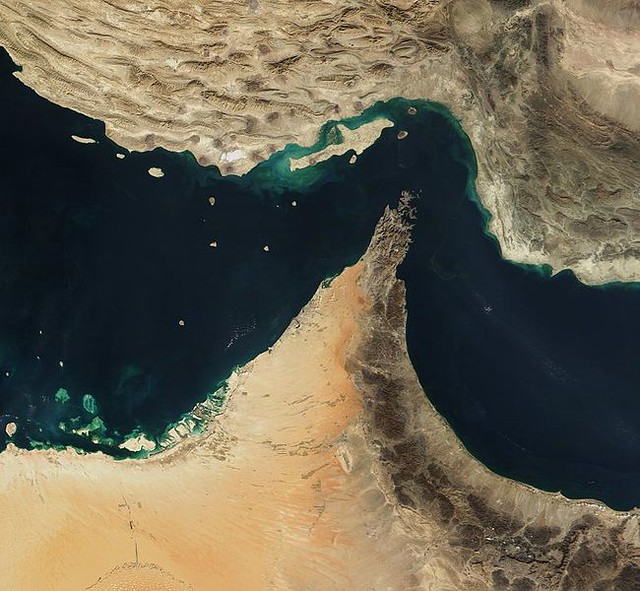
But while the war is deadly, people on the home front may be concerned about their wallets, on which the war will surely have an effect. The main way in which this is already occurring is through the closing of the Strait of Hormuz. The crucial chokepoint lies between Iran and Oman, separating the Persian Gulf and Gulf of Oman. This closing has already caused fuel costs around the world to rise, as around 20% of the world’s oil and gas supply is unable to go anywhere. While this most obviously affects gas prices, U.S. dependence on fossil fuels will allow for increases in the cost of food, utilities, and even fertilizer. Since February 28th, when bombs began to fall over Iran, the price of crude oil has increased by 41%.
The price of crude oil is tied very closely to the price of gasoline. This was apparent in 2022, when there was outrage over high prices at the pump. At that time, both international and domestic oil prices shot above $60 per barrel, U.S. Gasoline prices peaked simultaneously at just over $5. With the price of crude oil increasing, this effect is set to take place. Another immediate effect was on the stock market, as the Dow Jones Industrial Average fell 400 points on March 4. But In the case of the current conflict, this kind of economic effect is intentional. Through strategic decisions like closing the Strait of Hormuz, they can attempt to make the war economically unsustainable for the United States and Israel. This is especially crucial considering Iran’s military is outmatched by the U.S. This strategy has been highlighted through other actions taken by Iran as well. On March 2, Iranian drones attacked Qatari gas facilities, after which the company QatarEnergy announced a full pause on gas production.
Overall, the economic impact of the war will be immense. While renewable options will become more competitive, oil and the many industries that rely on it will become volatile. With global trade being disrupted, inflation could follow. The outcome economically for citizens around the world is largely dependent on when the Strait of Hormuz is made safe for trade again. Rerouting the majority of shipping that passes through it is not feasible, due to its geography, as well as the fact that the Suez Canal alternative could be made dangerous by new threats from Iran-backed houthis. Still, 172 million barrels of oil set to release from the U.S. emergency reserve could buy consumers time.