
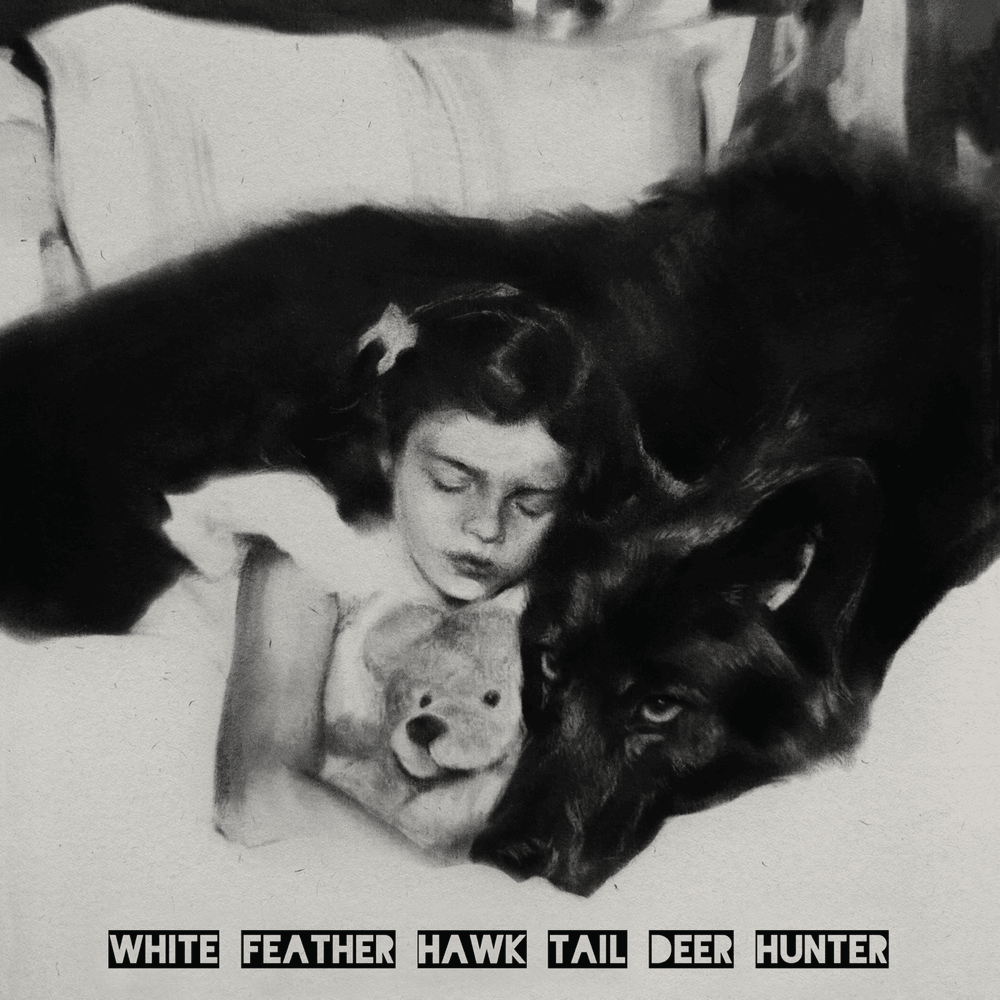
Lana Del Rey has released her third single “White Feather Hawk Tail Deer Hunter” for her upcoming album Stove, about a year after the last single “Bluebird”.
Since the start of her career, Del Rey has often been mischaracterized. She’s been accused of glamourizing abuse, being anti-feminist, and most recently of being a trad-wife. She was also rarely celebrated by critics at the start of her career. When her debut album “Born To Die” came out, many in the music industry didn’t consider her to be a serious artist. She was a fabricated femme fatale, inauthentic, and out of touch. That thought process continued, albeit less so, as she released 3 more albums. It wasn’t until her album “NFR” was released that she gained more grace from critics, and her art was taken more seriously than before. In 2021, Pitchfork even reevaluated “Born To Die” and changed the albums score from a 5.5/10 to a 7.8/10. “White Feather Hawk Tail Deer Hunter” focuses on the trad-wife conversation.
Ella Fitzgerald’s song, “Laura” is sampled in the beginning, immediately transporting you into the thorough world Del Rey has crafted. The sample mimics a train in a tunnel that’s on the way to the twilight zone, while simultaneously sounding like the introduction to a Disney villain. Almost abruptly, the sample ends, and a folky and gritty, almost elemental or natural, guitar begins.
“He’s my white feather hawk tail deer hunter,” Del Rey says, immediately establishing a subject: her husband, Jeremy Dufrene. In a now-expired Instagram story, Del Rey thanked him for dancing when she would pull his ‘hawk tail’ hair and say it was getting long, referring to his beard. This long title is just an affectionate nickname; the ‘deer hunter’ part was likely put there to enhance the southern and outdoorsy soundscape. In 2024, the pair got married, igniting controversy once his past social media activity was found. He reposted some videos around 2023 and 2024 that praised President Donald Trump, at least in comparison to Joe Biden. He also reposted a video that could be perceived as transphobic, later telling a fan in direct messages on TikTok that the post wasn’t about a transgender individual, but about a man entering the women’s bathroom. This comment continued and he explained that he no longer supported Trump, never voted in the 2024 election, and believed politicians to be hypocrites. As recently as February 2026, Dufrene wrote in a comment section, “No MAGA supporter here.”
The first verse’s lyrics aren’t really sung, but instead spoken like she was reading at a slam poetry competition. She describes a cosmic love, relating their first meeting to being hit by an arrow, a reference to Cupid. “He’s just in my bone marrow,” she says, like it’s an intrinsic, inevitable thing. The usage of ‘just’ in that line makes it sound more flippant than it is, in order to show how their connection runs so deep, that him being an essential part of her living happily doesn’t even faze her. She’s never even thought of another option; it’s not possible since the two are destined to be. “Like a bird in the heart, like a sparrow,” Del Rey continues, furthering the narrative of true love. In Greek mythology, sparrows are considered sacred to Aphrodite, the goddess of love and beauty. The way she delivers this verse is reminiscent of earlier in her career, mostly Ultraviolence. She sounds nonchalant, like nothing can bother her.
In the pre-chorus, the song starts its first switch. The production is still ‘natural’ and gritty, but turning a bit softer. “Everyone knows I had some trouble, but I’m home for the summer,” she says, “And I wanted to know if I could use your stove to cook somethin’ up for you.” The ‘trouble’ she’s referring to is most likely a mix of her reputation and past relationships. While this is partly a genuine love song, at the crux, it’s a satirical jab at the trad-wife conversation. This pre-chorus, along with the chorus, is a caricature of her. The character she’s portraying is done with her career. She’s home for the summer, settling down, and ready to cook whatever her Husband wants. It’s not even her stove, it’s his. Although, there is still the aspect of genuine love.
Later in the song, Del Rey switches up the lyrics of the pre-chorus and says, “But it’s been three summers, I know it’s strange to see me cooking for my husband.” The other part of her trouble is a past relationship, but she’s over it now and happily in love. Along with that, she’s breaking the 4th wall here and exploring why exactly people were so quick to jump on the trad-wife bandwagon. For most of her career, she’s been put in the box of being a sad girl. She doesn’t have a good track record with love, so her being happily married is unprecedented for some. There’s also the aspect of how delayed her album Stove is. Originally, Del Rey announced that her album “Lasso” will be released in September 2024. That didn’t end up happening, and she claimed that it was now called “The right Person will stay” and it will come out May 21st, 2025. I don’t think anyone was shocked when, again, this didn’t pan out. “Henry, Come On” was released as a first single on April 11th, 2025, and “Bluebird” on April 18th. Finally, on August 26th, she revealed the seemingly final title “Stove” in her interview with W Magazine. Instant gratification is trending, so when people saw that she got married in 2024 and wasn’t staying consistent for this album rollout, the trad-wife conversation was fired up. It’s still strange to think that, and it is frankly misogynistic.
The previous sweet sounding production in the pre-chorus evolves into a hypnotizing tone, matching the abnormal but bewitching melody of the chorus. “‘Cause you’re positively voodoo, everything that you do,” Del Rey says. Depending on who you ask, voodoo can mean two completely opposite things. Voodoo (not Louisiana Voodoo) is a sensationalised version of Vodou, a religion that is an amalgamation of Vodun and Roman Catholicism. Since both terms are used interchangeably by many, despite being very different, she could be using either definition. The westernized version is more likely because the chorus resembles someone being possessed. In the religion, possession is more of a ceremonial and positive thing, which is not necessarily how Del Rey is using it. She utilizes juxtaposition to show how strange it would be for her to want to be a puppet on strings, flipping it on its head and making anyone who genuinely believed that look like a fool.
“Whoopsie-daisy, yoo-hoo, yelling, “I love you”, out to my white feather hawk tail deer hunter,” she says. Somehow, Del Rey is able to swirl the long phrase ‘white feather hawk tail deer hunter’ into this infectious chorus and make it fit. The possessed version of Del Rey sounds like she’s a 50’s housewife from a cartoon. She sings ‘whoopsie-daisy’ and ‘yoo-hoo’ in a high pitched tone, conveying this character as a bit of an airhead, a common stereotype about women shown in media most prominently around the 50’s and 60’s. Del Rey directly breaks free of this character by saying, “I imagine you do know how absolutely bad I’m with an oven.” This is said in order to solidify to everyone that she is not a trad-wife. She uses humor to take a dig at those who believe this narrative. It points out how strange it is to call her a trad-wife when she doesn’t display traits of a house wife.
The guitar returns for the second verse, going back to the first tone of the song. She says, “Before I met him, wore a bow over three summers, now it’s a ribbon ‘round my neck, and it’s cherry-colored.” Summer is referenced multiple times in the song, and here it’s more about a past relationship than her reputation. These lines are just her explaining that she has moved on from a past relationship and is happily in a new one. The only other difference is that this isn’t the trad-wife caricature speaking. Instead, this is the real Lana Del Rey, if a bit exaggerated. She says, “I’ve just been baking, waitin’ on a spirit hunter,” and “Yeah, I’m a ghost, doesn’t mean I feel nothin.’” While she has moved on from her relationships, she hasn’t moved on from her past. Del Rey is indecisive, because on one hand she still identifies with her old self, but she’s also waiting for a ‘spirit hunter’ to come and neutralize it. The verse is full of things she was associated with in her early career, like bows, nicotine, cherries, summer, and obviously, when she says, “I love my daddy, of course, we’re still together,” that’s a nod to her past.
In the bridge, Del Rey is questioning the things she posts online. She says, “Yikes, like maybe should’ve saved for a friend,” and “Stick with picking daisies for Instagram.” This could be referring to when she posted “Question for the culture” on Instagram in 2020 to critique what she believed to be a double standard. She listed female artists like Cardi B and Beyoncé, explaining how she felt that they were allowed to sing about being sexy and cheating, while when she did she was accused of glamorizing abuse. A wave of backlash met her after this, as those artists have been wrongfully criticized in similar ways. Along with that, many people pointed out that the majority of artists she mentioned were women of color, and some claimed she didn’t recognize her own white privilege. What Del Rey means by sticking to posting daisies on Instagram is essentially just minding her own business.
Lyrics from the chorus and the verse overlap as the song slowly fades out. Its production sounds magical, and it perfectly encapsulates the whole song.
