
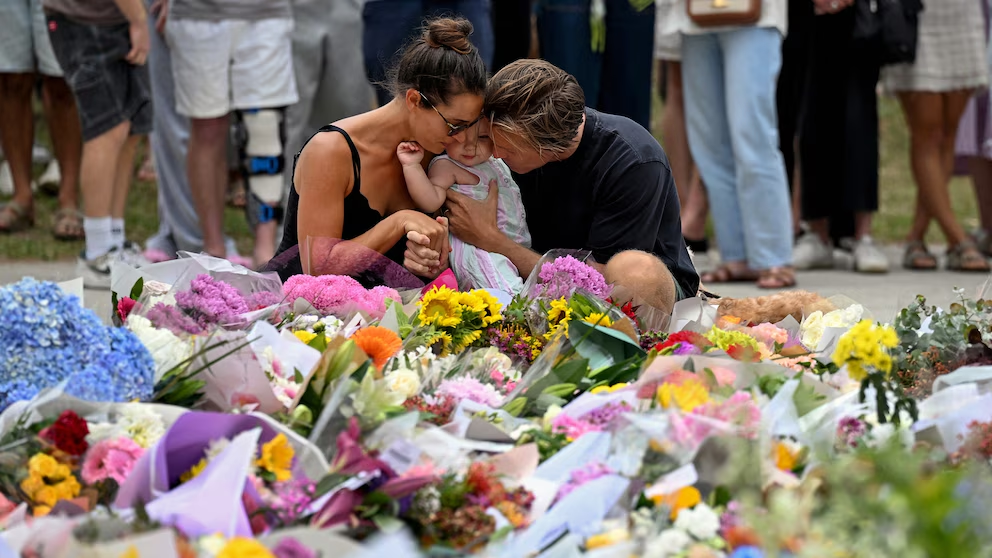
A mass shooting occurred at a Hanukkah celebration held in Bondi Beach, Sydney, on December 14th, 2025. There were at least 15-16 people killed and dozens injured from the incident.
On December 14th, a crowd had gathered for the “Chanukah by the Sea” event, a festival marking the first night of the Jewish holiday. Later, two gunmen that were identified father and son started opening fire at the crowd. While the father was killed at the scene by the police, the son was critically injured and taken into custody. Authorities discovered explosive devices in their vehicles as well.
In the midst of this, Australian officials described the attack as an antisemitic terrorist act. The federal police said that the shooting was inspired by extremist ideology, suggesting that the attackers were motivated by Islamic State-linked views.
This tragedy is now known and marked as Australia’s deadliest mass shooting in nearly 30 years, after the 1996 Port Arthur massacre that led to gun law reforms. Victims ranged widely in age from 10 years-old to older adults. Many of the victims were also community leaders such as rabbis and Holocaust survivors. Those responsible of using such weapons had licensed firearms which intensified scrutiny of the current gun regulations and licensing systems.
Additionally, leaders across Australia expressed shock and grief, calling for national unity and stronger methods to prevent such attacks from happening again. The National Cabinet also agreed to overhaul gun laws with proposals that contain stricter licensing, a national firearms register, and limiting the number of guns an individual can own.
The news of the shooting overall spread rapidly globally and sparked international reactions. Many observers see the attack not only as a security failure, but also a reminder of the rise in antisemitic violence globally, leading to discussions about community protection and how societies respond to hate-based terrorism. The story of Bondi Beach is now part of Australia’s collective memory, a reminder and responsibility to confront violence and prejudice in times like these.
